Friday, October 14, 2011

Auburn Car Museum


What a wonderful field trip we had the Auburn Cord Duesenberg Museum today! There are so many pictures to share with you.
It began with this wonderful slide welcoming our group to the museum. This is the first time we have had our name on a slide to welcome us.
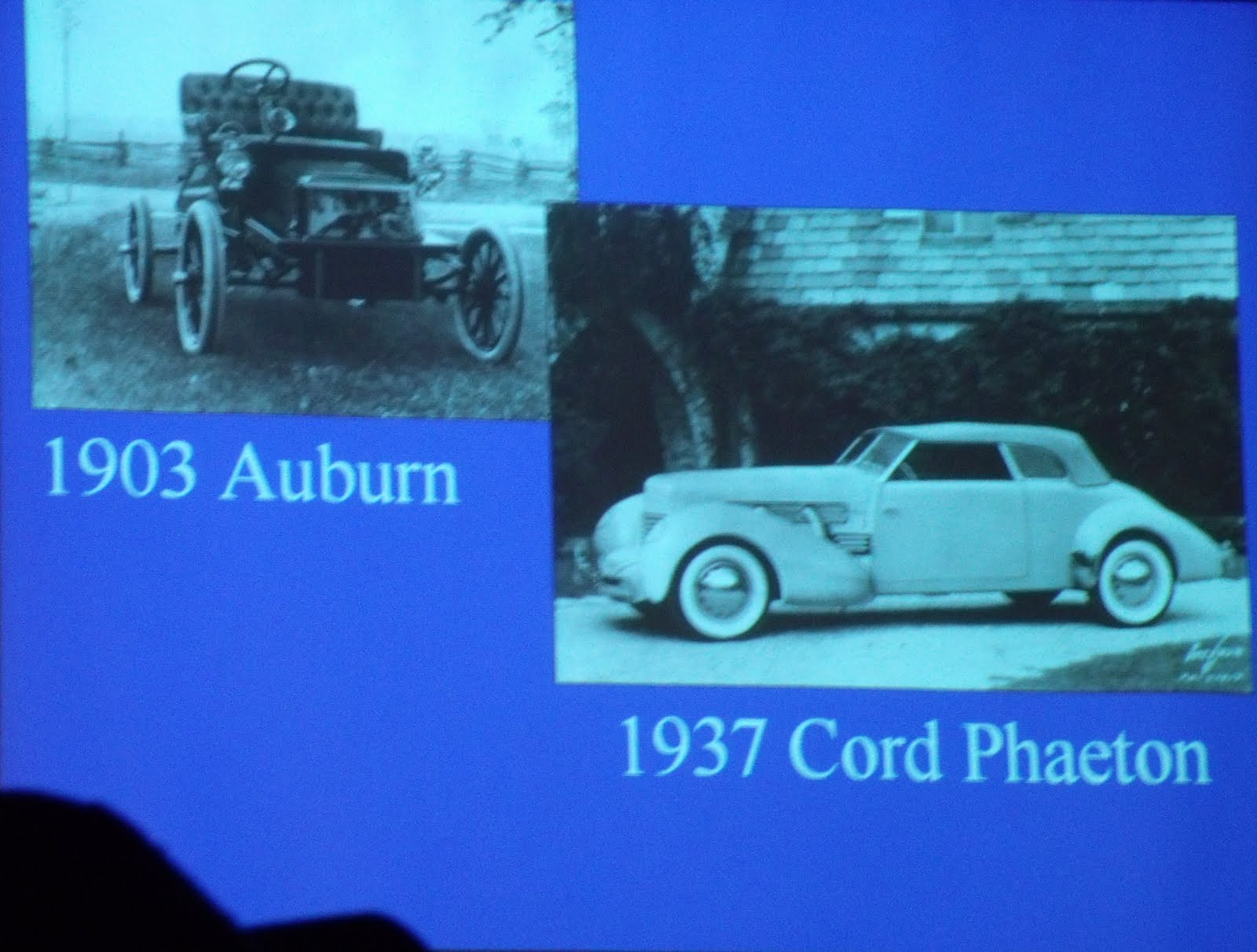
After explaining a little history about the development of the cars and the inventors, this slide shows the first Auburn produced to the last car produced at the Auburn factory.


Sometimes when someone thinks something is really great, they'll say "It's a Duesy." Did you know that phrase refers the Duesenberg because that was a really great car? We learned something today! (Well, we learned much more than that!)

After the slideshow presentation, each child was given a photo scavenger hunt booklet of 10 cars to find in their museum. They were to write down the year and make of each car. The kids had so much fun exploring the rather large museum. Every time you turned a corner, there was another room. There were so many more cars there than I expected to see. What a great learning experience for the kids.

Throughout the museum, there are signs warning you not to touch the cars. Finally, they get to a car that invited you to sit in the car and feel free to touch!

So, now on to some of the cars we saw:

1926 Model A Duesenberg
This car orginally cost $8,300 when a new Dodge Roadster cost only $855 and a new home would've cost $3,500. There were only a little more than 600 of this model produced. This car originally belonged to the mayor of San Francisco.

1930 Cord L - 29
The cost of this car was $3,195. This was the first mass produced front wheel drive American car.

1932 Auburn 12-160A Coupe
Powered with a Lycoming V-12 that produces 160 horsepower, this car cost $1,545 then dropped to $1,105.

There were other cars on display besides the Auburn, Cord or Duesenbergs:
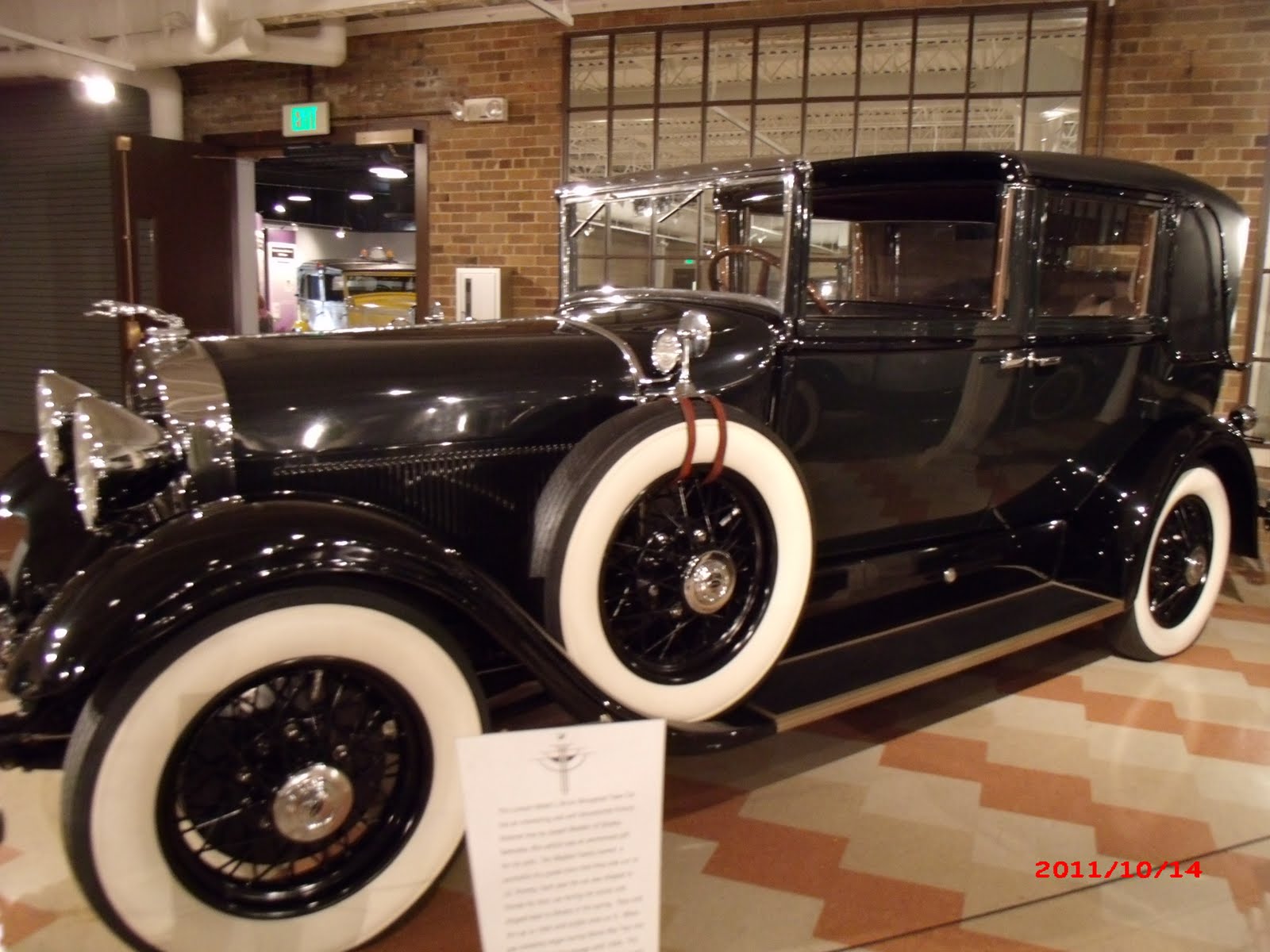
1929 Lincoln L Brunn Brougham Towncar
There were only 58 of the Brunn Brougham Towncars produced between 1929-30. This car cost $7,200, but you could get a basic Ford at this time for $450.
This particular car was ordered new by Joseph Madden of Omaha, Nebraska for his wife. They owned a dry goods store that was later sold to J.C. Penney. This car was shipped to Florida for their winter use and shipped back to Nebraska when they returned. They sold the car and during WW2 when rationing began, it was put into storage. It changed hands again in 1972 and had a complete restoration. This car now only has 12,000 original road miles on it!

1910 Zimmerman Runabout
This car only cost $840 in 1910. It was owned by John Zimmerman who was company president and later a purchasing agent for Auburn Automobile Company.

This car was E.L. Cord's personal automobile - a 1937 Cord 812.
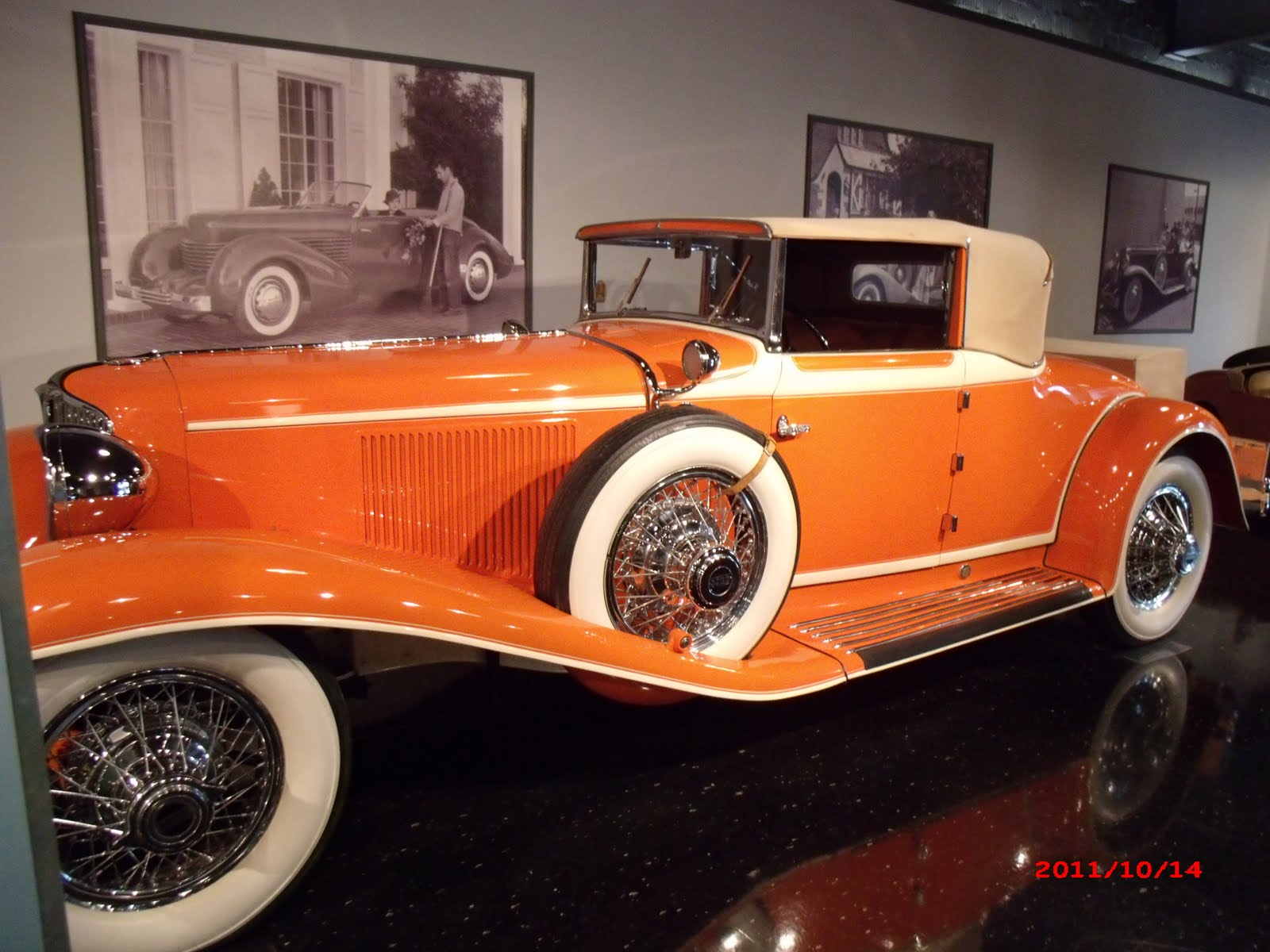
This car was Frank Lloyd Wright's personal car - 1929 Cord L-29

There was a Haynes - Apperson section of the museum also. Elwood Haynes, from Kokomo, joined with the Apperson brothers to produce automobiles in Kokomo - the factory later became Haynes-Stellite.
This was Edgar Apperson's personal car - 1920 Apperson Model 820. This car sold new for $2,950.

1901 Haynes - Apperson Model A Motor Carriage
The original price was $1,500. This is an extremely rare model.

1900 Eckhart
The Eckhart Carriage Company began on 7th Street in Auburn, Indiana and was incorporated in 1885. Two years later, Frank Eckhart went on the road selling to wholesalers in the midwest states. As the business grew, the Auburn Automobile Company began to take shape.

1904 Auburn
This is the oldest Auburn known to exist.

1930 Auburn 8-125 Sports Sedan
This car may be the ONLY one of it's model left to survive.

1957 Chevrolet

1956 Ford Thunderbird

This is also a Ford Thunderbird (sorry, I don't know the year). My first car was a Ford Thunderbird, but mine looked VERY different from either of these cars!

I had the boys each choose their favorite car. Nicolas's was the one you could sit in:

And Alex's was a 1999 Plymouth Prowler:

The base price for the Prowler is a mere $40,000. (Yep, my son has expensive taste.)

Friday, October 7, 2011

Mississinewa 1812 Re-enactment


Every year our family attends the local re-enactment of a battle between the Americans and the Miami Indian tribe (with the British joining in.) As we study Indiana history, we learn that the Americans wanted control of the waterways from the Indians. The British (who just lost the American Revolution) are still trying to regain control of the forts from the Americans. The Americans came in with orders to take over the area, but to leave the women and children be. However, that did not happen. The Americans took prisoners - women and children with them - after the battle. Many of the American soldiers died or suffered severe frostbite on the journey back to Ohio. We enjoy festival - especially when there is good weather, like there was on this weekend.

They were cooking Buffalo tongue for dinner and gave out sample bites. We all tasted it. It wasn't too bad. They said it was very lean meat.
The boys go for the homemade root beer.

Thursday, September 29, 2011

Captivating Clouds


We used Shining Dawn Book's Captivating Clouds nature study this week. It's been a good week for clouds here. We have learned to identify each type of cloud along with the prefixes that tell us the altitude of the clouds. Monday was a good day for looking at shapes in the clouds since we had large cumulus clouds everywhere. The boys made cotton ball models of the 3 main types of clouds at the 3 different altitudes. We talked more about the water cycle (we had already discussed this with our creek study) and evaporation. We made it rain in a bottle and talked about the different types of precipitation. Tomorrow the boys will practice being meteorologist's and give me the weather forecast for the day. Here are some pictures of our journey:


Cumulus Clouds:Cirrus Clouds:
Cumulus Clouds:
The boys filled out one of these sheets for each day of the week about the cloud type and weather along with a drawing of the clouds for that day.

Their cotton ball models of the cloud types:The "making rain" experiment:

Friday, September 16, 2011

Habitat activity


We are using Apologia's Zoology 3 book this year for science. I really enjoying using the Apologia books as a read aloud and doing the notebooking and other activities together. I am learning so much along with the boys. For this activity, we were learning how habitat and camoflauge effect the life cycles of an animal. We tore different colors of construction paper into pieces and mixed them into a laundry basket. Then we mixed M&Ms in with the torn paper. The boys had 1 minute to find as many M&Ms as they could. Then we counted them and subtracted from what we started out with to see which color had the most "survive" in that habitat.

Of course, when we were done, none of the M&Ms "survived". :) They were all eaten!

Thursday, September 8, 2011

Incredible Creeks


We are using Shining Dawn books Incredible Creeks this week and probably next week. So far we've enjoyed the exploration of our own creek, although there aren't many places that are easily accessible to the water. However, we are hoping to explore a local river this weekend when we go camping. We like these nature studies because we can pick and choose what fits best for our family. So far, here are the things we have done:

-Read The Raft by Jim Lamarche
-Discussed other words for "creek" including brook, stream, and river.
- We talked about how all creeks flow to larger creeks or rivers and they all eventually flow into the ocean. We looked at a local map to see where our creek flows - it eventually gets to the Wabash River, which flows to the Ohio River which flows to the Mississippi, which flows to the Gulf of Mexico!
- Drew pictures of the water cycle to help us understand the process. Isn't it amazing to understand that some of the water flowing in our creek was here hundreds of years ago?
- We made underwater viewfinders to use at the creek, although our creek is so clear and shallow right now that we really didn't need the viewfinders.


- While at the creek yesterday, we took a water sample and brought it home to look at it under the microscope. Unfortunately, we didn't see any microscopic animals. We'll try again at another creek.
- We observed the rocks and the smoothness of them from the water's current.

- We observed the things floating in the water and the vegetation growing on the banks of the creek.


- We observed the living things in the creek - leeches, crawdads and small fish.


Today it's raining, so we won't be down at the creek, but we will look at some paintings by Monet of rivers and read a poem by Emily Dickinson, "The Sea Said 'Come' To the Brook".

Thursday, August 25, 2011

Homemade Roller Coasters!

Here is Nicolas's Garden Hose Roller Coaster:


Here is Alex's Paper Towel Roll Roller Coaster:


Monday, August 1, 2011

Plans for this new school year

Now that May/June baseball is over, and July camps (scout and church camp) are over, August is here. That means the start of our new school year and many weekend family camping trips. So, as I think about what next year will look like, I see many changes. The first and biggest one is that we have a 7th grader living in the house! (Eek!) In an effort to allow him to grow up, he will have several subjects that will be more independent than he is used to.

Math will be the same as always - Math U See - continuing with where they left off last year (with a little review to start out.)

Language Arts will be one of the first major changes he sees. For writing, he will begin Institute for Excellence in Writing. This is a video based program where he'll watch Andrew Pudewa teach him a concept and then use it for an indefinite length of time (until mastery) and continue on to the next thing. The actual writings will span many different subjects (science, history, etc.), but the concepts he uses in his writings will be from IEW.

Also within Language Arts is reading. He will begin reading some classics (Tom Sawyer, Alice in Wonderland, etc.) and doing activities that go along with these stories.

In History, he will continue with Mystery of History, a program that combines traditional and Biblical history. He did early history last year and will begin Middle Ages this year. We will modify it some from last year, but he did it pretty much independently last year also.

Science will continue to be from Apologia, as we have done for the last 4 years. We do this together, with me reading the text aloud, doing experiments and projects along with the lessons, and them keeping notebooks on what they have learned. The last 2 years have been Zoology - beginning with birds, moving on to fish last year and looking at mammals this year.

For fun, we'll throw in some different unit studies along with way to give us a break in the monotony - roller coasters, trees, creeks, clouds, etc. Most of these will be done this fall when the weather is nice.

We will try to keep 2 read-alouds going this year - a biography and the other alternating between a classic and something fun.